
(Last updated: June 30, 2026)
Key Summary
- Heat pump installation offers many benefits, such as energy efficiency, convenience, and tax incentives.
- SEER ratings, size, and your household’s unique needs and preferences all determine the best HVAC system for your home.
- Calvey Heating and Air installs heat pumps in California, upgrading homes with efficient, reliable heating and cooling solutions.
Heat pump installation in the Bay Area offers significant benefits, including energy efficiency and tax incentives. Like any big appliance purchase, there are always important factors to consider. We’ve compiled a summary of benefits, considerations, and what to expect with your heat pump installation to help you feel confident in your choice.
What Are Heat Pumps?
Heat pumps are a type of HVAC system that moves heat from one place to another. Rather than burning fuel to produce heat, heat pumps extract thermal energy from the outdoors to bring it inside in the winter, and reverse in the summer, pulling heat from inside the house and transferring it outdoors.
Californian homes rarely experience temperatures below freezing in the Mediterranean-type climate, so heat pumps can serve as a primary heat source and air conditioner, providing reliable, efficient heating and cooling power year-round.
Benefits of Installing a Heat Pump in California
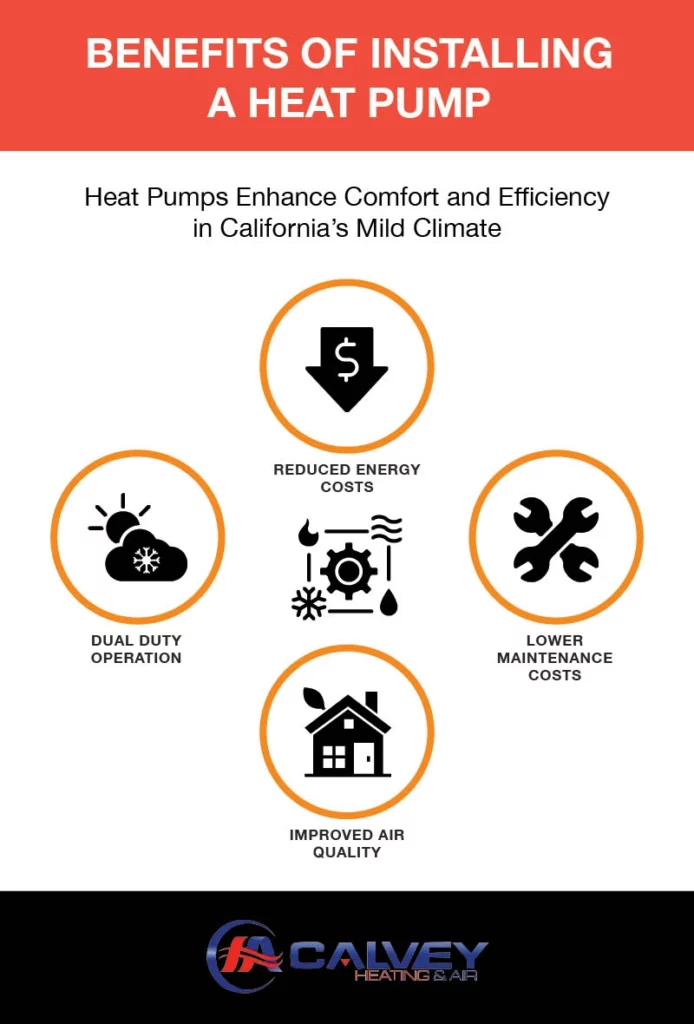
More homeowners choose heat pumps in California because of their many benefits, such as:
- Dual-duty operation: Heat pumps cool and heat depending on the season and your needs, so you only need one system instead of a furnace and an air conditioner.
- Reduced energy costs: Heat pumps are energy-efficient and can lower your utility bills.
- Lower maintenance costs: With only one system to maintain and repair, you’ll save on service costs. With regular maintenance, your system can last up to 15 years.
- Improved air quality: Heat pumps use a filter to clean the air before circulating it through your home, improving the overall air quality.
Types of Heat Pumps for The Bay Area Homes
Several different types of heat pumps are available, including the most common air-source heat pumps and geothermal (ground-source) heat pumps, which extract heat from beneath the ground. Other types of heat pumps include:
- Ducted heat pumps: If your home has existing ductwork and you want to upgrade to an efficient heat pump, you can switch out your furnace and AC with a ducted unit.
- Ductless mini-splits: Homes or spaces without existing ductwork are ideal for ductless units. Ductless mini-splits are outdoor compressor-and-condenser units that connect to one or more indoor air handlers, providing room-by-room zoning.
- Hybrid dual-fuel systems: Some homeowners choose to install a heat pump with another heat source, such as a gas furnace, as a backup. This option is less common in our mild climate, where a heat pump can effectively replace a furnace, but popular in places where temperatures remain below freezing for weeks at a time.
What Size Heat Pump Does Your Home Need?
In addition to type, the unit’s size significantly affects your system’s service life and efficiency. A small unit offers a lower upfront cost but is more likely to be overworked to meet your demands, leading to more costly repairs and a shorter service life. Overcompensating with a large unit can cost you more to operate. A Calvey Heating and Air technician can help determine which heat pump will work best in your SoCal home.
High-Efficiency Heat Pump Ratings Explained
Wondering what high-efficiency heat pump installation means? SEER2 ratings are the modern rating system for air conditioner and heat pump efficiency. The rating is calculated by dividing the system’s total cooling output by the total electricity used during the normal cooling season. We recommend you look for a model with a SEER of 18 or higher to enjoy the benefits of a high-efficiency machine. The minimum rating in California is SEER2 14.3 or SEER 15.
Considerations Before Installing a Heat Pump
There are some considerations homeowners should take into account before installing a new heat pump.
Maintenance costs
Heat pumps are energy-efficient but require regular maintenance to ensure optimal performance. We recommend scheduling seasonal HVAC maintenance twice a year to enjoy reliable year-round energy efficiency and climate control. Our heat pump maintenance services include an inspection, electrical component testing, air filter replacement, and lubrication. We can also provide duct cleaning services using our Rotobrush system if required.
Energy or fuel source
From gas- to electric- and solar-powered HVAC, each system type has unique home requirements to consider. These include:
- Gas: Gas heat pumps require a safe, stable gas line and an electrical hookup compliant with local building codes.
- Electric: Your home’s electrical system should have a high-amperage dedicated circuit capable of powering a heat pump.
- Solar-powered: Solar heat pumps require solar panels and mounting equipment
Ductwork and vents
A whole-house heat pump relies on ductwork and vents to distribute the warm and cool air throughout your home. In many cases, if you already have ductwork, it can be as simple as installing a switch, or it may require retrofitting and a few upgrades. If you don’t have existing ductwork, you’ll need it installed. That can increase the overall installation cost, and you may lose ceiling height during installation.
Zoning and smart thermostats
With a smart thermostat, you can create zones to maximize efficiency by directing air to specific areas of your home for dynamic indoor climate control wherever it’s needed. Zoning uses dampers to physically split your home into specific heating and cooling areas. When paired with a smart thermostat, your home’s HVAC system can be automated to your daily schedule, reducing energy waste and improving comfort.
Available Incentives for Heat Pumps in 2026
California residents may qualify for state and utility company heat pump rebates. These include Residential Energy Rebate programs and potential utility rebates ranging from $100 to $3000 per household.
The federal government is currently offering tax credits for heat pump installations. Until 2032, you can apply tax credits to incentivize energy-efficient home upgrades. You may be entitled to up to $ 2,000 in tax credits for installing a heat pump with a SEER rating of 15 or higher. Get an additional $1,200 for updating your windows, doors, water heater, and insulation.
Schedule Service With Calvey Heating and Air
When you need heat pump installation services in California, choose Calvey Heating and Air. Family-owned and operated, we serve San Jose and the greater Bay Area. Our service area includes Redwood City, Campbell, Pleasanton, Los Altos, Saratoga, Los Gatos, Belmont, and other nearby communities.
We understand that home system improvements can be disruptive to your daily life. The certified and insured HVAC technicians at Calvey Heating and Air work quickly to install the new system. We can even help with the permit process, if one is needed. As a family-owned business, we pride ourselves on our quality service and honest business practices. Contact us today for more information about our heat pump installation process or to schedule service.